


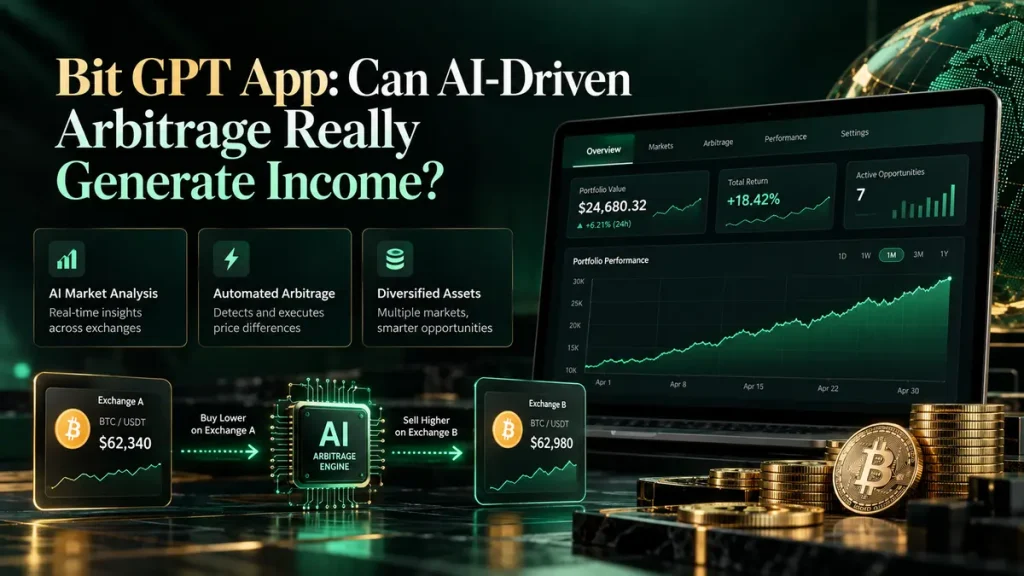
AI-driven arbitrage promises automated opportunities across markets by spotting price differentials. This article explains how the Bit GPT App and similar systems work, what to expect financially, and how to start responsibly.
What is Bit GPT App and How Does AI-Driven Arbitrage Work?
Bit GPT App combines machine learning models with market feeds to identify fleeting arbitrage windows. The system monitors exchanges, calculates spreads, and can execute trades automatically when conditions meet predefined criteria. Successful arbitrage depends on speed, low fees, and reliable data.
Key Components of AI Arbitrage
- Data feeds: real-time prices and liquidity.
- Execution engine: low-latency order placement.
- Risk controls: stop-loss, position limits.
Evaluating Profitability: Realistic Income Potential, Risks, and Cost Factors
Profits from arbitrage are incremental and often narrow. Trading costs, withdrawal fees, slippage, and competition reduce margins. Consider exchange reliability and tax treatment when estimating net returns.
Common Risks
- Execution failure and latency.
- Regulatory changes affecting exchanges.
- Counterparty and operational risks.
Practical Guide: Getting Started, Best Practices, and Regulatory Considerations
Begin with small capital, test with paper trading, and gradually scale. Diversify strategies and keep software updated. Follow compliance rules in your jurisdiction and maintain thorough records.
Resources and Tools
For platforms that integrate AI and trading features, review providers like Bit GPT App and explore trusted AI trading platform options to compare capabilities and support.
FAQ
- Is arbitrage risk-free? No. Execution and market risks remain.
- How much capital is needed? It varies; start small to test strategy.
- Do taxes apply? Typically yes; consult a tax advisor.
Conclusion
AI-driven arbitrage via apps like Bit GPT App can generate income but is not a guaranteed path to wealth. Careful testing, cost management, and regulatory awareness are essential.