

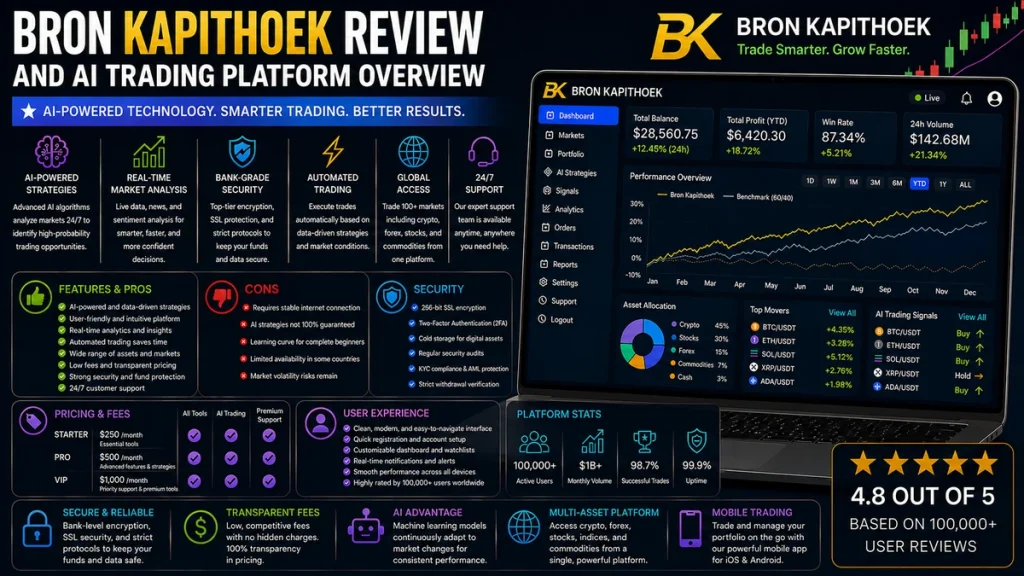
This article examines Bron Kapithoek’s background, credentials, and trading philosophy, and offers an overview of AI trading platforms to help readers evaluate tools and strategies.
Bron Kapithoek: Background
Bron Kapithoek is known in trading circles for a methodical approach that blends technical analysis with risk management. His background emphasizes disciplined position sizing and clear entry/exit rules.
Credentials and Reputation
Kapithoek’s reputation is built on transparent trade explanations and community engagement. He focuses on continuous learning and adapting strategies to market conditions.
Trading Philosophy
Key principles include capital preservation, evidence-based setups, and avoiding overleveraging. His philosophy stresses consistency over chasing high returns.
AI Trading Platform Overview: Features
Modern platforms offer automated signals, backtesting, and portfolio analytics. Integration with exchanges and customizable strategies are common.
Performance and Risk
Performance varies by strategy and market regime. Robust backtesting and realistic forward testing are essential to gauge potential outcomes.
User Experience and Support
Good interfaces, responsive support, and educational resources improve adoption. Community forums and documentation aid learning curves.
Choosing a Platform
- Evaluate transparency and track records.
- Prioritize risk controls and customization.
- Compare fees and connectivity options; consider reviews and demos.
For an overview of AI-driven tools, see AI trading platform for additional context and comparisons.
FAQ
- Is AI trading suitable for beginners? It can be, with proper education and conservative settings.
- How important is backtesting? Essential to understand strategy behavior before live trading.
- Can AI eliminate risk? No—AI helps manage processes but cannot remove market risk.
Conclusion
Bron Kapithoek’s disciplined philosophy and the evolving capabilities of AI trading platforms together offer tools for informed traders; thorough evaluation and risk management remain crucial.