


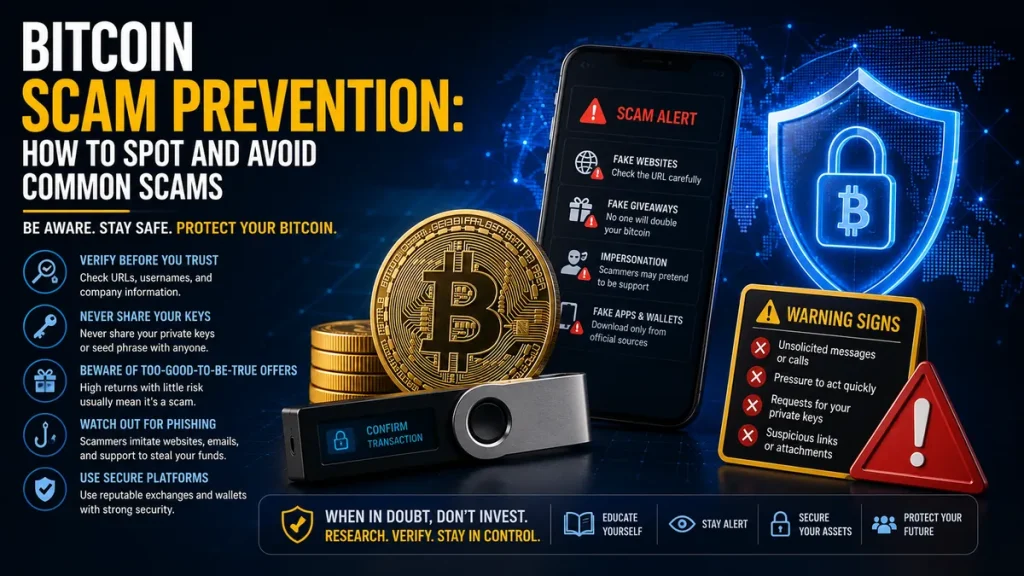
Bitcoin scams cost people time and money. This guide helps you spot tricks and keep your wallet safe.
How to Spot and Avoid Common Bitcoin Scams
Watch for unsolicited offers, fake giveaways, phishing, and pressure to move funds. Never share seed phrases or private keys, and verify URLs carefully.
- Phishing emails imitating wallets or exchanges
- Unsolicited requests to transfer funds
- Bad grammar, typos, or unusual payment methods
For more guidance, crypto safety tips.
Essential Safety Practices to Protect Your Bitcoin Wallet
Use a hardware wallet, back up seeds offline, and keep software updated. Use strong passwords and 2FA; avoid public Wi‑Fi when signing in.
- Enable backups and encryption
- Use unique passwords and 2FA
- Update devices and apps
Red Flags and Safe Transaction Habits for Bitcoin Users
Pause when told to act fast or sent to unfamiliar addresses.
- Verify recipient addresses on multiple channels
- Test with a small amount before large transfers
Best Practices for Exchanges and Wallet Security
Choose reputable platforms; enable alerts and withdrawal controls. Bitcoin scams.
- Use withdrawal whitelists and notifications
- Check site security and avoid suspicious links
What to Do If You Suspect a Scam
Stop, don’t send funds. Gather evidence and report to the platform or authorities.
- Save messages and URLs
- Scan devices and change passwords
FAQ
- What is a Bitcoin scam? A fraudulent attempt to steal funds or data.
- How can I verify a wallet address? Double-check and use trusted sources.
- What should I do after a suspected scam? Pause activity, report, and monitor accounts.
Conclusion: Stay vigilant and apply these practices to protect your coins and your online accounts.